Skip to content

Most Patients Don’t Search Until the Pain Gets Worse
When most people think about Google Ads, they imagine a patient actively searching for help:
- “night guard near me”
- “TMJ dentist Boston”
- “teeth grinding treatment”
- “jaw pain specialist”
And that’s exactly where Google Search performs extremely well.
Search advertising captures existing intent.
Someone already feels discomfort.
Someone already suspects a problem.
Someone is actively looking for answers.
That’s why Google Search remains one of the most powerful tools for healthcare marketing.
But there’s another side to patient behavior that often gets overlooked.
The Hidden Reality of Healthcare Searches
Many patients suffering from the following:
- teeth grinding
- jaw tension
- headaches
- poor sleep
- TMJ discomfort
- facial pain
Don’t search immediately.
Some normalize the symptoms.
Some assume stress is the cause.
Some don’t realize the issue may be connected to oral health at all.
In many cases, people live with symptoms for months — sometimes years — before finally typing something into Google.
That means practices relying only on search advertising are often waiting for the patient journey to mature before they become visible.
By the time someone searches, the pain or frustration has already escalated.

The Role of Awareness Marketing
This is where awareness channels become incredibly valuable.
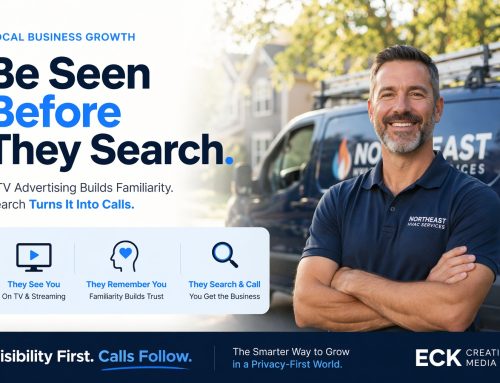
Streaming TV, Connected TV (CTV), and household-level targeting allow healthcare practices to reach local audiences before they begin searching.
Instead of waiting for intent to appear, awareness marketing helps create familiarity and trust early.
Today’s patients spend hours each week on:
- Hulu
- Roku
- YouTube TV
- Peacock
- ESPN+
- Streaming news and entertainment platforms
Modern advertising platforms now allow local businesses — including healthcare practices — to appear inside these environments with highly targeted campaigns.
Not mass-market TV.
Targeted visibility.
Specific households.
Specific ZIP codes.
Specific demographics.
Specific behavioral audiences.

Why Repetition Matters
Healthcare decisions are rarely impulsive.
Patients want:
- familiarity
- trust
- reassurance
- credibility
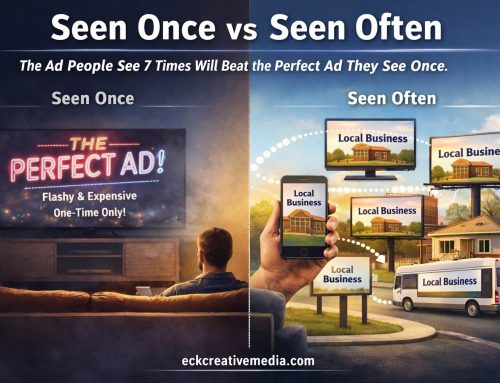
Repeated exposure plays a major role in that process.
A patient may see a short educational video about teeth grinding while watching streaming TV one evening, ignore the symptoms for a few weeks, and only later search Google after waking up with worsening jaw pain or headaches.
Now the Google Search ad appears.
The practice is no longer a stranger.
That changes behavior.
Search + Awareness = Stronger Long-Term Strategy
Google Search remains essential because it captures active intent at the exact moment someone is looking for help.
But awareness marketing strengthens the ecosystem around it.
The combination often looks like this:
Google Search
Captures patients actively searching now.
Streaming TV / Household Targeting
Builds familiarity, education, and future branded demand over time.
Together, these channels support a more complete patient journey.
Especially in healthcare fields like
- TMJ treatment
- oral appliance therapy
- sleep-related dentistry
- preventive dental care
where patient education plays a major role in conversion.

The Marketing Landscape Has Changed
Patients no longer move through a simple linear process.
They discover providers across multiple channels:
* streaming platforms
* social content
* Google searches
* reviews
* educational articles
* word of mouth
This shift isn’t limited to healthcare. More local businesses are realizing that relying only on search advertising often means waiting for demand instead of helping create it.
The practices that remain consistently visible across those touchpoints often gain a significant advantage over time.
Not because of one ad.
But because of sustained visibility, trust, and familiarity.
And in healthcare, trust is everything.
Frequently Asked Questions
What is awareness marketing in healthcare?
Awareness marketing helps healthcare practices educate and reach potential patients before they actively search for treatment. This can include streaming TV advertising, educational content, social media visibility, and household-level targeting campaigns.
How is streaming TV advertising different from traditional TV ads?
Streaming TV advertising allows practices to target specific audiences, ZIP codes, demographics, and households through platforms like Hulu, Roku, YouTube TV, and other connected TV services. Unlike traditional broadcast TV, campaigns can be highly targeted and measurable.
Why are Google Ads still important for healthcare marketing?
Google Ads remains one of the most effective ways to capture existing patient intent. When someone actively searches for terms like “TMJ dentist near me” or “night guard Boston,” search advertising helps practices appear at the exact moment patients are looking for help.
Why combine awareness marketing with Google Search?
Awareness marketing builds familiarity and trust before a patient searches. Later, when symptoms worsen or the patient becomes ready to act, Google Search advertising captures that intent. Together, these channels create a more complete patient acquisition strategy.
What types of healthcare practices benefit from awareness marketing?
Practices focused on patient education often benefit the most, including:
- TMJ treatment
- sleep-related dentistry
- oral appliance therapy
- cosmetic dentistry
- preventive healthcare
- specialty medical services
Does streaming TV advertising work for local healthcare practices?
Yes. Modern connected TV platforms allow local healthcare providers to target specific geographic areas and audience types, making awareness campaigns accessible even for regional practices and specialty providers.
What is household targeting in digital marketing?
Household targeting allows advertisers to reach specific homes or audience segments based on geography, interests, demographics, and behavioral patterns. This helps practices deliver more relevant messaging to local audiences.
Why do patients often delay searching for treatment?
Many patients normalize symptoms like jaw pain, teeth grinding, headaches, fatigue, or poor sleep. Others may not realize the symptoms are connected to oral health or TMJ-related conditions. As a result, patients often wait months or years before actively searching for treatment options.
Looking Beyond Traditional Search Advertising?
Modern healthcare marketing is no longer limited to showing up only when patients search.
Practices that combine patient education, awareness, trust-building, and intent-based search strategies often create stronger long-term visibility and more consistent growth over time.
If you’re exploring how streaming TV, household targeting, Google Ads, and educational content can work together as part of a broader patient acquisition strategy, we’d be happy to start the conversation.
Because in healthcare, visibility matters — but trust matters even more.
- Is AI Recommending Your Business? How to Measure AI Visibility - July 17, 2026
- The Ultimate Guide to Social Media Marketing: Success Strategies - July 9, 2026
- Landing Page Best Practices for Maximum Conversions - July 3, 2026