Skip to content
How to Reach Local Customers Before They Search
Many small businesses rely heavily on search-based marketing such as SEO or Google Ads. These strategies can be very effective—but they only work when someone is actively searching for your services.
What about the thousands of potential customers in your community who may need your services soon but have not yet searched online?
This is where programmatic advertising becomes a powerful addition to a modern marketing strategy.
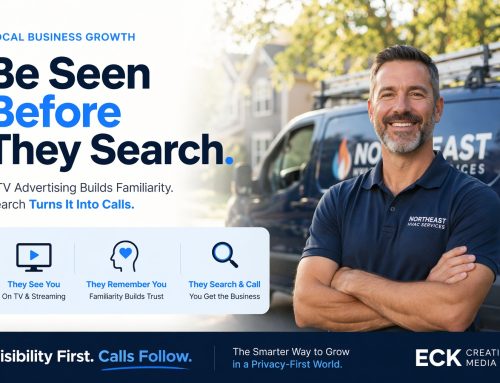
Programmatic advertising allows businesses to reach targeted households through websites, mobile devices, and streaming television platforms before customers even begin searching.
For local businesses such as dental practices, plumbers, contractors, and medical offices, this approach can significantly increase brand visibility and help build awareness in the neighborhoods where future customers live.
What Is Programmatic Advertising?
Programmatic advertising is an automated way of buying and delivering digital advertisements across websites, mobile apps, and streaming television platforms using data and targeting technology.
Instead of manually placing ads on individual websites, programmatic systems use advanced algorithms to automatically deliver advertisements to the right audience at the right time.
This allows businesses to reach specific households or geographic areas with far greater precision than traditional digital advertising methods.
For local businesses, programmatic advertising often focuses on household-level targeting, where ads are delivered to selected residential areas or specific neighborhoods.

How Programmatic Advertising Works
Programmatic advertising platforms use data signals and geographic targeting to determine where ads should appear. Ads can be delivered across multiple digital environments, including
• news and media websites
• mobile apps
• online video platforms
• streaming television services (Connected TV)
• digital display networks
Because programmatic systems operate in real time, ads are placed automatically on thousands of websites and platforms where the selected audience is likely to be present.
This allows businesses to reach potential customers during their everyday online activity rather than waiting for them to perform a search.

Programmatic Advertising vs Google Ads
Google Ads remains an essential tool for capturing demand when customers are actively searching for services. However, programmatic advertising serves a different and complementary purpose.
Google Ads
• reaches customers who are already searching
• captures existing demand
• primarily search-based
Programmatic Advertising
• reaches households before they search
• builds awareness and brand recognition
• appears across websites, apps, and streaming TV
When combined, these two strategies create a more balanced marketing approach that both generates immediate leads and builds long-term awareness within the community.

Why Programmatic Advertising Is Valuable for Local Businesses
Local service businesses often depend heavily on geographic proximity. A dental practice, HVAC company, or contractor typically serves customers within a limited radius.
Programmatic advertising makes it possible to focus marketing efforts on the households most likely to become future customers.
Benefits include:
Neighborhood-level targeting
Businesses can focus advertising on households within their service area.
Increased brand visibility
Ads appear repeatedly across websites, apps, and streaming television platforms.
Reaching customers before competitors
Businesses can introduce their brand to potential customers before those customers begin researching services.
Multi-device exposure
Ads may appear on desktops, smartphones, tablets, and smart televisions.
For local businesses competing in crowded markets, this early brand exposure can be extremely valuable.
Example: Programmatic Advertising for a Local Dental Practice
Consider a dental practice located in a major city.
Rather than waiting for someone to search for “dentist near me,” programmatic advertising allows the practice to deliver advertisements to households within a defined geographic radius.
Residents in those neighborhoods may encounter the practice’s message while reading news articles, browsing websites, using mobile apps, or watching streaming television.
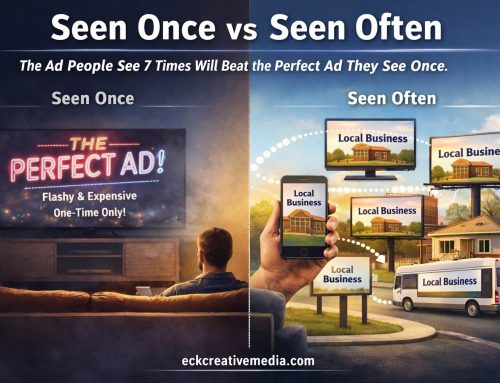
Over time, this repeated exposure builds familiarity with the practice’s name and services.
When those households eventually search for a dentist, they are far more likely to recognize and trust the practice they have already seen online.

Connected TV: A Growing Opportunity
One of the most exciting aspects of programmatic advertising is the ability to deliver ads through Connected TV (CTV) platforms.
Connected TV refers to streaming services viewed through smart televisions or streaming devices.
Programmatic CTV advertising allows businesses to appear in high-quality video environments similar to traditional television but with far more precise targeting.
For local businesses, this means advertisements can reach specific households while they watch streaming content on platforms such as smart TVs, streaming sticks, and connected devices.
What Is Connected TV Advertising?
Connected TV advertising refers to video advertisements delivered through internet-connected televisions and streaming devices.
These include:
-
Smart TVs with built-in streaming apps
-
Streaming devices such as Roku, Apple TV, or Fire TV
-
Gaming consoles connected to television screens
-
Streaming platforms and apps
Because these devices connect to the internet, advertisers can use the same targeting technologies used in digital advertising—including geographic targeting and household-level delivery.
This allows businesses to reach viewers in specific cities, neighborhoods, or even selected households.
Why Connected TV Matters for Local Businesses
For many years, television advertising was financially out of reach for most local businesses. Buying television airtime typically required large budgets and broad geographic coverage.
Connected TV changes this.
With modern programmatic advertising platforms, businesses can run targeted video campaigns designed specifically for local markets.
This offers several important advantages:
Local targeting
Ads can be delivered to households within a specific service area.
Premium viewing environments
Streaming television provides high-quality video experiences similar to traditional television.
Brand credibility
Appearing on television screens—especially in a home environment—can significantly increase brand trust.
Cross-device campaigns
CTV ads can be combined with display and mobile advertising for greater reach and reinforcement.
How Connected TV Works with Programmatic Advertising
Connected TV advertising is often delivered through programmatic advertising platforms, which automatically place ads across digital networks.
A typical programmatic campaign might include:
-
digital display ads on websites
-
mobile ads on apps and devices
-
streaming video ads on connected TVs
This creates a coordinated marketing presence across multiple digital environments.
For example, a household might see:
-
A video ad on their streaming television
-
A display ad while reading news online
-
A reminder ad while browsing on their mobile device
This repeated exposure helps strengthen brand recognition and keeps the business top-of-mind when customers eventually search for services.
The Future of Local Advertising
Connected TV continues to grow rapidly as more households transition away from traditional cable subscriptions.
For businesses looking to expand their marketing reach beyond search engines, Connected TV represents a powerful way to build awareness and deliver compelling visual messages to local audiences.
When combined with search marketing and other digital channels, Connected TV advertising helps create a comprehensive strategy that reaches customers both before and during the moment they decide to search.

Is Programmatic Advertising Right for Small Businesses?
Programmatic advertising can be an excellent option for businesses that want to expand their marketing reach beyond search engines.
It is particularly useful for businesses that:
• serve a defined geographic area
• want to build long-term brand awareness
• operate in competitive local markets
• wish to reach customers before they begin searching
When combined with SEO and search advertising, programmatic strategies can create a powerful and balanced digital marketing ecosystem.
Conclusion
Programmatic advertising represents a major evolution in digital marketing. Instead of relying solely on customers who are already searching for services, businesses can proactively introduce their brand to households within their community.
For local businesses looking to expand visibility, strengthen brand awareness, and reach future customers earlier in the buying journey, programmatic advertising offers a powerful opportunity.
By combining search marketing with household-level targeting and Connected TV exposure, businesses can create a more comprehensive marketing strategy designed for today’s digital landscape.
Ready to Reach Local Customers Before They Search?
Programmatic advertising helps local businesses build awareness across websites, mobile apps, and streaming TV in the neighborhoods where their future customers live.
If you’re curious how IP targeting and Connected TV advertising could complement your SEO and Google Ads strategy, we’d be happy to walk you through the possibilities.
Frequently Asked Questions
Programmatic advertising for small businesses: What is it and how does it help small businesses?
Programmatic advertising for small businesses is the automated buying and placement of ads across digital channels using programmatic technology and programmatic platforms. It helps small businesses reach their ideal customer with data-driven, personalized ads in real-time, optimizing bid strategies and ad placement to meet business goals. Compared with traditional advertising, programmatic display advertising and programmatic audio allow small business owners to scale campaigns affordably, see your ads perform with analytics, and adjust creative, format, and placement to drive business growth.
Target: How do I define my target audience for successful programmatic campaigns?
To define a target audience for successful programmatic campaigns, start with your business needs and ideal customer profiles — demographics, interests, behaviors, and IP or geographic targeting. Use analytics from past campaigns, CRM data, and programmatic platforms’ audience segments to make the approach data-driven. Continuous optimization and real-time bidding lets you refine who sees your display advertising, native ads, video ads, or audio ads to improve business results and advertising offers small businesses higher relevance.
Display advertising: What formats can small businesses use and which format works best?
Small businesses can use many formats including banner ads, native advertising, programmatic display advertising, video ads, and programmatic audio or audio advertising. The best format depends on your business goals and where your target audience spends time: display and banner ads for broad awareness, native ads for content-driven engagement, video ads for storytelling and conversions, and audio ads for reach on streaming platforms. Testing formats and using analytics to optimize digital ads helps determine what delivers the best ROI for your marketing techniques.
Display ad campaign: How much should small businesses bid and what bid strategies work?
Bid strategies depend on campaign goals—awareness, clicks, or conversions. Start with conservative bids using automated bid strategies provided by programmatic platforms (e.g., target CPA or ROAS) and move to manual bidding once you have performance data. Optimization uses real-time signals and analytics to adjust bids by placement, device, and audience. Many small business owners benefit from programmatic experts or platform recommendations to set initial bids and learn how to optimize for business results while minimizing spend.
Benefits of programmatic advertising: What are the key benefits for small businesses?
The benefits of programmatic advertising include automated ad buying that saves time, precise audience targeting, real-time optimization, and measurable analytics that show how ads are working. Programmatic offers small businesses efficient ad placement across display, video, and audio channels, the ability to personalize ads for the ideal customer, and flexible formats to match business goals. These advantages make programmatic a powerful tool for small businesses aiming for growth and improved marketing techniques over traditional advertising.
Optimization: How can small business owners optimize programmatic ads to improve results?
Optimization starts with clear business goals and tracking via analytics. Regularly test creative variations, formats, and placements; use A/B tests for creatives and landing pages; refine audience segments and adjust bid strategies based on performance. Leverage real-time reporting to pause underperforming placements and increase spend where conversions occur. Use optimization tools within programmatic platforms to automate adjustments, and consider working with programmatic experts for advanced strategies that align with your business needs.
Video ads: Can small businesses benefit from programmatic video ads and how do they compare to other types?
Yes—programmatic video ads are highly effective for brand storytelling and driving engagement. Compared to banner ads, video typically delivers higher attention and conversion rates but may cost more per impression. Use short, mobile-optimized video creative and target audiences with programmatic data to reach the ideal customer. Combining video with display and native ads in a unified campaign often yields stronger business results and helps optimize digital ads across the buyer journey.
Types of programmatic advertising: What types exist, and which should small businesses try first?
Types of programmatic advertising include programmatic display advertising (banner ads), native ads, programmatic audio/audio ads, video ads, and connected TV. Small businesses should start with programmatic display advertising and native ads for broad reach and low-cost testing, then expand to video ads and programmatic audio as budgets and confidence grow. Choosing types should reflect business goals, target audience habits, and available creative resources to ensure successful programmatic campaigns.
programmatic advertising worth: Is programmatic advertising worth it for every business, and how to measure success?
Programmatic advertising can be worth it for many small businesses but not every business will see immediate ROI; it depends on clear business goals, the quality of creative, and proper use of data-driven targeting and optimization. Measure success with predefined KPIs—impressions for awareness, CTR for engagement, CPA for conversions, and ROAS for revenue. Use analytics and regular optimization to improve performance. When aligned with business needs and supported by suitable creative and formats, programmatic can be a scalable tool for advertising effectively and driving business growth.
What is programmatic advertising?
Programmatic advertising is an automated system for buying and delivering digital ads across websites, mobile apps, and streaming platforms using data and targeting technology.
How does programmatic advertising work for local businesses?
Local businesses can target households within a specific geographic area and deliver ads across websites, mobile devices, and streaming television platforms.
Is programmatic advertising better than Google Ads?
Programmatic advertising and Google Ads serve different purposes. Google Ads captures demand from people already searching, while programmatic advertising builds awareness before customers search.
Can small businesses afford programmatic advertising?
Many programmatic campaigns can be structured with flexible budgets, making them accessible to small and medium-sized businesses.
What industries benefit most from programmatic advertising?
Industries that rely on local customers often benefit greatly, including dental practices, healthcare providers, contractors, home services, and professional services.
- Is AI Recommending Your Business? How to Measure AI Visibility - July 17, 2026
- The Ultimate Guide to Social Media Marketing: Success Strategies - July 9, 2026
- Landing Page Best Practices for Maximum Conversions - July 3, 2026